 how-to
How to Transition a Farm Away From Chemicals Step by Step
Last Updated: November 1, 2026
Quick Summary
To transition farm away from chemicals, start with a dated baseline soil test that measures both chemistry and biology, then phase out one input at a time. Replace each synthetic product with a biological alternative before dropping it, and monitor the crop for two to three weeks after each change. Expect a possible yield dip before soil biology rebuilds.
- Record a baseline soil test with date, field and sampling depth before changing anything.
- Phase out the most damaging synthetic products first, one input at a time.
- Replace each product with a biological alternative before stopping it.
- Watch the crop for two to three weeks after each change before moving on.
- Expect slower early growth as soil biology builds up, so track results over the full season.
Table of Contents
- Why Farms Move Away From Synthetic Inputs
- Building Your Organic Farming Transition Plan
- Replacing Synthetic Fertilizers With Biological Inputs
- Managing Weeds Without Herbicides
- Using Cover Crops to Rebuild Soil Health
- Booking Your Soil Biology Assessment With BioSys
- Frequently Asked Questions
Farmers who stop using synthetic inputs often expect a hard drop in yields. The reality is more mixed. Operations that transition away from chemicals may see a dip in the first season before soil biology rebuilds. Knowing how to transition farm away from chemicals step by step is what separates a smooth shift from a costly failure.
This guide walks through the process in order. You will see what to test, what to phase out first, and which biological inputs and cover crops can take over the work that synthetic products used to do. Each step builds on the one before it, so start at the top.
Why Farms Move Away From Synthetic Inputs
Farms move away from synthetic inputs for a mix of reasons. Input costs rise and fall, and a farm that depends on them has little control over its margins. Soil that receives heavy chemical use can lose the living organisms that cycle nutrients on their own.
A common reason is simple: the farm wants healthier land for the next generation.
The trade-off is real, though. Synthetic products act fast. Biological systems take time. Knowing that up front helps you plan.
Building Your Organic Farming Transition Plan
A good organic farming transition plan is written down, dated, and tied to specific fields. Vague intentions like "use less chemistry" rarely hold up during a bad season.
Your plan should answer four questions:
- Which fields will change first, and which will wait?
- What inputs will you stop, and in what order?
- What will replace each input?
- How will you measure whether the change is working?
Keep the plan flexible. Revisit it after each season and adjust based on what the soil and crops show you.
Start With a Baseline Soil Test
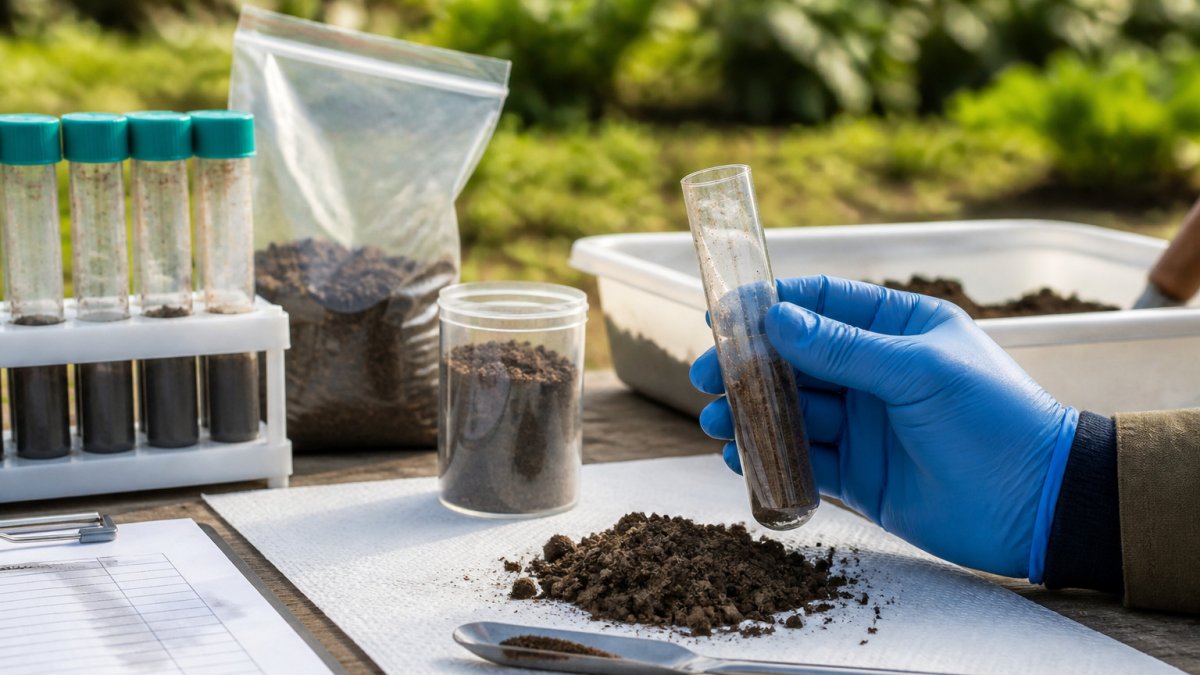
Before you change anything, test your soil. A baseline gives you a reference point, so you can tell later whether your changes helped. Ask for both standard chemistry and biological measurements if your lab offers them. Chemistry tells you what nutrients are present. Biology tells you whether the organisms that make those nutrients available are active.
Record the date, the field, and the sampling depth. Consistent sampling makes future comparisons far more useful.
Phase Out Inputs Gradually
Stopping everything at once is the fastest way to lose a crop. Instead, phase out inputs one at a time:
- Stop the products that cause the most soil damage first.
- Replace each product with a biological alternative before you drop it.
- Watch the crop closely for two to three weeks after each change.
- Move to the next input only when the crop looks stable.
The article lays out the steps of a transition plan and the order in which to phase out inputs, which can be summarised as follows.
| Step | What to do | Timing |
|---|---|---|
| Baseline soil test | Test chemistry and biology; record date, field and depth | Before any change |
| Phase out inputs | Stop the most damaging products first | One input at a time |
| Replace each input | Add a biological alternative before dropping the product | Before stopping the product |
| Monitor the crop | Watch closely for stability | Two to three weeks after each change |
| Review the plan | Adjust based on what soil and crops show | After each season |
Replacing Synthetic Fertilizers With Biological Inputs
The biggest question for most growers is how to feed the crop without synthetic fertilizers. The answer is to feed the soil biology, which then feeds the plant.
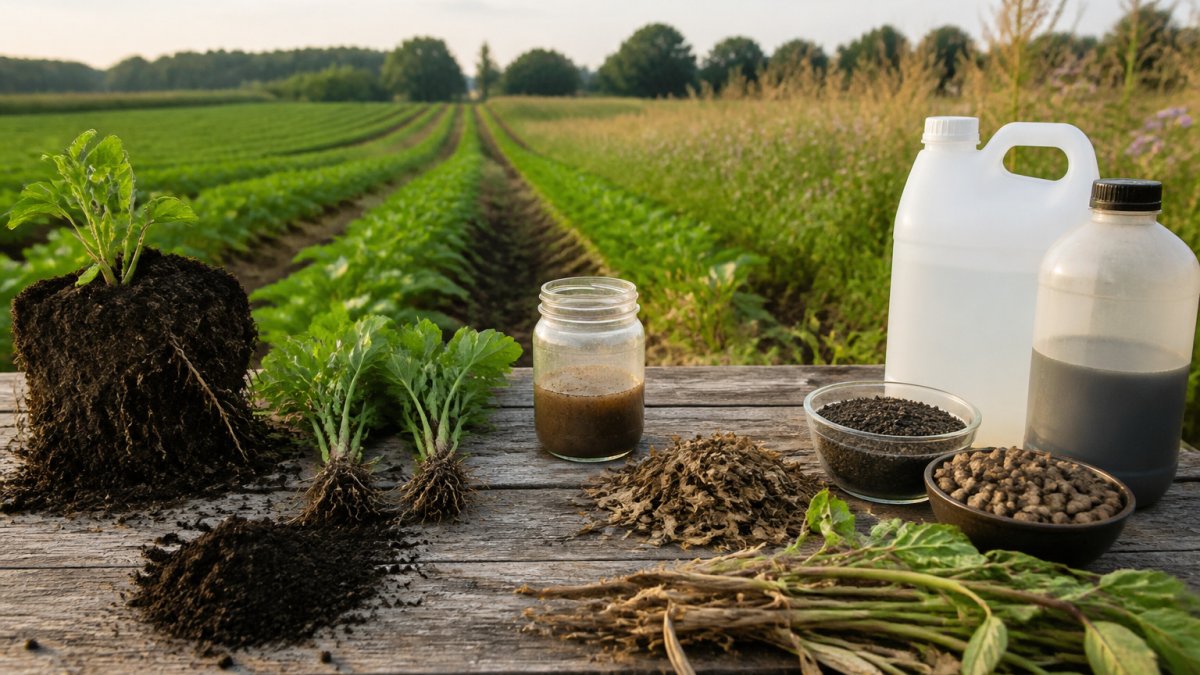
Biological inputs work by supporting bacteria, fungi, and other organisms that break down organic matter and release nutrients slowly. Each has a different job, so choose based on what your soil test shows.
Some practical points to keep in mind:
- Apply compost in amounts that match your soil test results, not a fixed rate.
- Match inoculants to crop type and soil conditions.
- Expect slower early growth as the biology builds up.
- Track yield and plant color over the full season, not just the first few weeks.
Pricing depends on quantity, delivery, and formulation, so check BioSys's website for current prices or request a quote for your specific acreage.
Managing Weeds Without Herbicides
Weed control is often the hardest part of the transition. Without herbicides, you need a system, not a single fix.
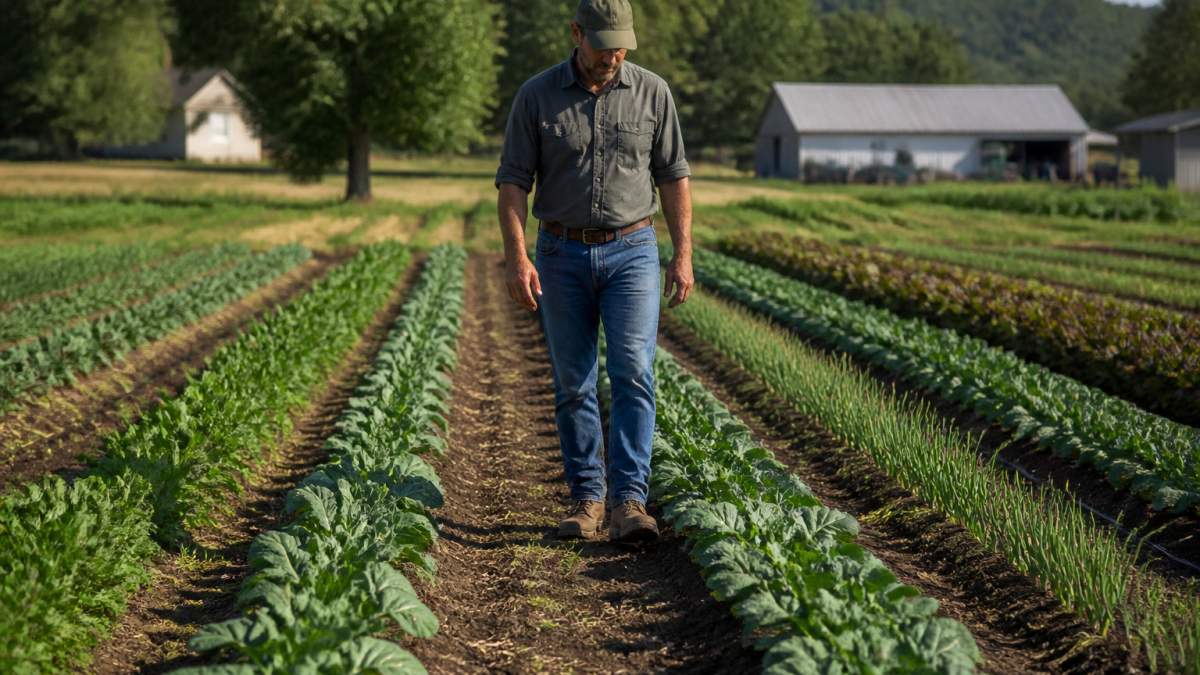
Start by identifying your most problematic weeds. Each species responds to different methods. Then combine several approaches:
- Timing: Till or cultivate just before weeds set seed.
- Mechanical tools: Use flame weeders, hoes, or rotary tools between rows.
- Crop competition: Plant dense cover or a tighter crop spacing to shade out weeds.
- Mulch: Organic mulch blocks light and slows weed germination.
A common mistake is relying on tillage alone. Repeated tillage can damage soil structure and bring new weed seeds to the surface. Mix methods and watch your weed pressure over time.
Using Cover Crops to Rebuild Soil Health
Cover crops are a useful tool in a transition. Between cash crops, they protect bare soil, feed soil organisms through root exudates, and add organic matter when they are terminated.
Choose cover crops that fit your rotation and goals. Legumes add nitrogen. Grasses build organic matter. Brassicas can help break up compacted layers. Many farms use a mix to get several benefits at once.
Plant cover crops early enough to establish before cold weather or dry spells. Terminate them at the right stage, usually before seed set, so they decompose and feed the next crop instead of becoming a weed problem.
Booking Your Soil Biology Assessment With BioSys
Once you understand the steps, the next question is who can help you interpret your results. BioSys offers soil microbial analysis, regenerative landscaping, and biologically complete, custom-fit compost production.
If you are ready to start, book a soil biology assessment to get a clear baseline for your fields. You can also read how to improve soil microbial health to see which practices have the biggest effect on the biology your transition depends on.
Frequently Asked Questions
How do you transition a farm away from chemical inputs?
Start with a baseline soil assessment so you know what your soil is actually doing before you change anything. Then phase out synthetic inputs one field or one input type at a time rather than all at once. Replace them with compost, biological amendments and cover crops, and track yield, soil structure and input costs each season. Plan cash flow and crop buffers for the early seasons before you begin.
How long does it take to transition to regenerative farming?
Soil biology typically needs several seasons to rebuild, and the exact timeline depends on starting soil condition, climate, crop mix and how quickly synthetic inputs are reduced. Results vary widely, so plan for a multi-year transition. Treat the transition as a multi-year plan with milestones rather than a single switch, and retest soil periodically to confirm progress.
How can farmers manage weeds without herbicides?
Combine several non-chemical weed control methods rather than relying on one. Stale seedbed preparation, timely mechanical cultivation, mulching, crop rotation and dense cover crops all reduce weed pressure. Start scouting early and target weeds at the seedling stage, when mechanical methods work best. Expect to adjust equipment and timing as you learn which weeds dominate your fields.
Ready to build a plan around your land? Start with a soil biology assessment from BioSys, and get the baseline data you need to move forward with confidence.