 how-to
How to Reduce Fertilizer Costs Farming Without Cutting Yield
Last Updated: November 2, 2026
Quick Summary
To reduce fertilizer costs without cutting yield, start with soil testing so you only buy nutrients the crop actually needs, then use precision agriculture fertilizer application to match rates to each zone's yield potential. Tighten nitrogen timing with split applications and track every field in a written fertilizer budget to confirm savings hold across two to three seasons.
- Soil testing for fertilizer management turns guesswork into a nutrient map so you buy only what the crop needs.
- Build zone maps from three to five years of yield data, not a single season.
- Split nitrogen applications so nitrogen arrives when the crop is actively taking it up.
- Convert every product to cost per pound of actual nutrient to compare sources fairly.
- Compare yield, cost per acre and soil test trends across two to three seasons before making a rate cut permanent.
Table of Contents
- Step 1: Start With Soil Testing for Fertilizer Management
- Step 2: Use Precision Agriculture Fertilizer Application to Cut Waste
- Step 3: Tighten Nitrogen Fertilizer Management and Application Timing
- Step 4: Build a Fertilizer Budgeting for Farms Plan That Tracks Results
- Frequently Asked Questions
Step 1: Start With Soil Testing for Fertilizer Management
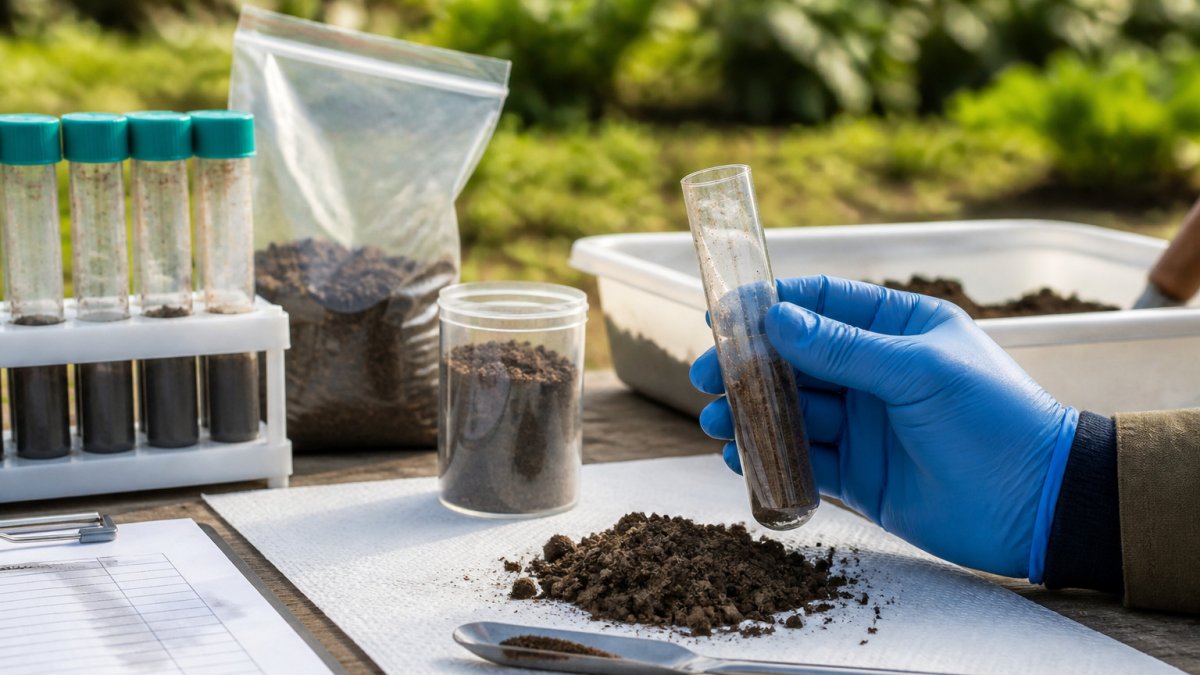
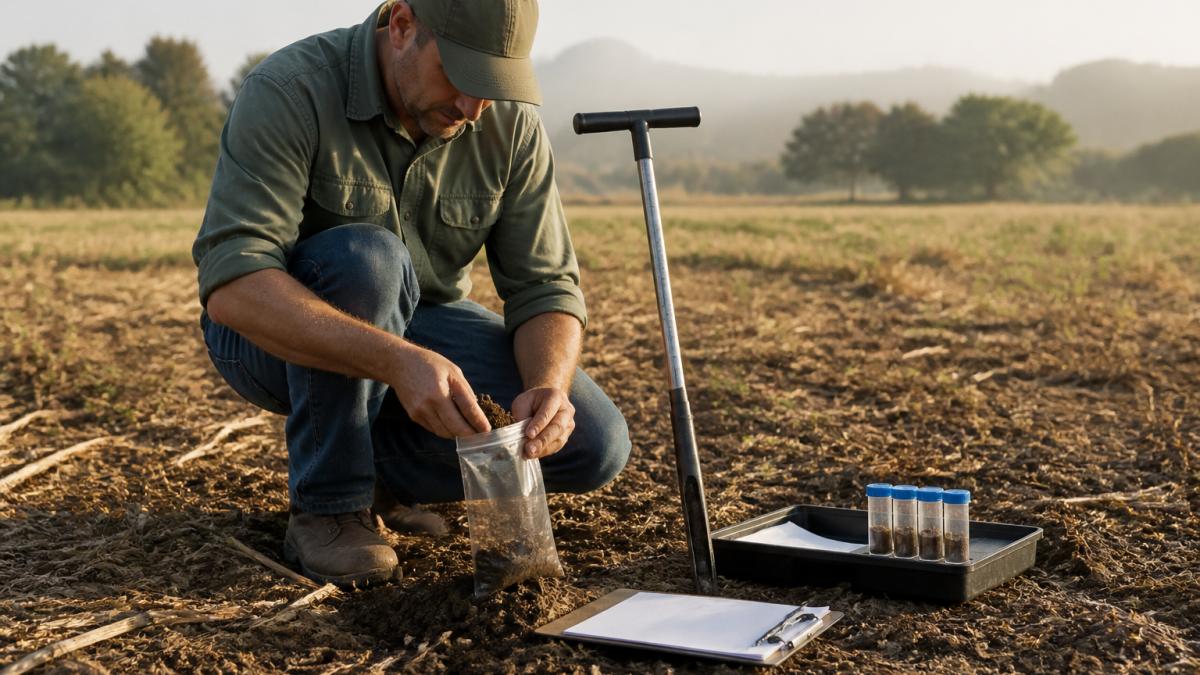
The fastest way to reduce fertilizer costs is to stop guessing what your soil already holds. Soil testing for fertilizer management turns guesswork into a nutrient map, so you only buy what the crop actually needs.
Test each field on a rotation, track organic matter and nutrient levels, and compare results across seasons to spot wasted fertilizer dollars.
For guidance on interpreting soil biology results, see how to act on soil biology test results, or review practical steps to improve soil microbial health.
Step 2: Use Precision Agriculture Fertilizer Application to Cut Waste
Precision agriculture fertilizer application uses variable-rate application to match fertilizer rates to each zone's yield potential instead of one flat rate. Savings come from fewer units bought on ground that cannot use them and fewer units lost to leaching and runoff.
Start with a zone map built from soil tests and yield history. Overlay three to five years of yield monitor data on soil test grids and aerial imagery, and draw three zones per field (low, medium, high). On phosphorus and potassium, hold low zones at full removal-replacement rates and trim high zones toward maintenance; on nitrogen, high zones usually justify the full rate because yield response is most reliable there.
Match technology to operation size. Equipment usually pays back only on larger acreage or where over-application was severe; on smaller farms, custom application or a shared arrangement often beats ownership.
Watch out: a zone map built from one season of yield data will bake in a drought or wet year, so use multiple years and check zones against soil test values before writing a prescription.
Keep precision zones tied to nitrogen timing, cover crop credits, and manure applications so a unit saved in one pass is not added back in another.
Step 3: Tighten Nitrogen Fertilizer Management and Application Timing
Nitrogen fertilizer management is where budgets leak fastest. Nitrogen moves with water, so timing and placement matter as much as rate.
Use split applications so nitrogen arrives when the crop is actively taking it up. Place nutrients near the root zone, and consider enhanced-efficiency fertilizers or organic nutrients such as manure where they fit. Watch weather before each pass; a heavy rain right after application is money in the ditch.
Step 4: Build a Fertilizer Budgeting for Farms Plan That Tracks Results
Fertilizer budgeting for farms only works when it is written down, priced, and reviewed. List each field, its yield goal, crop nutrient needs for nitrogen, phosphorus and potassium, and cost per unit of each source. Convert every product to cost per pound of actual nutrient, the only number that lets you compare urea against a blended product or manure.
For example, if a field calls for 150 lb of nitrogen per acre, divide each product's price by its pounds of actual nutrient to get cost per pound of N, then multiply by the planned rate for cost per acre. Do the same for phosphorus and potassium. The lowest cost per pound of actual nutrient wins on price; the decision then turns on application logistics, timing fit, and whether a stabilized or controlled-release product earns back its premium through lower losses.
Run a break-even check before committing to any cost-saving change. Add the new costs of any change and divide by expected savings per acre to get the acres or seasons needed to break even. If setup costs are fixed and savings modest, break-even acreage may exceed the farm; a custom applicator or shared arrangement is then the lower-risk path.
Track it through the season:
| Step | What to record | Why it matters |
|---|---|---|
| Soil test | Nutrient levels, organic matter, sample date | Sets the starting point and the trend line |
| Rate plan | Units per acre by zone, cost per pound of nutrient | Controls input costs and enables source comparison |
| Application | Date, rate, product, weather, applicator | Shows what actually happened and where losses occurred |
| Harvest | Yield by field and by zone | Ties spend to results |
| Season review | Cost per acre, yield, nutrient-use efficiency, soil test change | Shows whether the change paid off |
Monitoring is where most budgets fail. One season cannot tell you whether a rate cut worked, because weather dominates yield. Compare yield, cost per acre, and soil test trends across two to three seasons before making a cut permanent. If yield holds and soil test levels stay in range, the savings are real; if levels are falling, you are mining the soil.
Pair the plan with crop rotation, cover crops, reduced tillage and a focus on soil organic matter to build fertility and lower the rates needed for the same yield. Review and adjust each season, farm profitability comes from small, tracked corrections, not one big cut.
Frequently Asked Questions
How can farmers reduce fertilizer costs without lowering yields?
Start with soil testing so you apply nutrients the soil actually lacks, then match fertilizer rates to realistic yield goals and crop nutrient needs. Precision application, split applications timed to nutrient uptake, and cover crops that capture leftover nitrogen all cut waste. Track input costs and yields each season so you can see which changes pay off and adjust the fertilizer budget accordingly.
Can precision agriculture fertilizer application really reduce fertilizer use?
Yes. Variable-rate application uses soil test results and nutrient mapping to apply different rates across a field instead of one flat rate. That means less over-application on strong ground and no shortfall on weak spots. Precision placement also puts nutrients where roots can reach them, improving fertilizer efficiency and reducing leaching and runoff. The savings depend on how variable your fields are, so start with testing and mapping before investing in equipment.
Can soil biology help reduce reliance on synthetic fertilizer?
Soil biology testing shows how well your soil is cycling nutrients and building organic matter, which affects how much purchased fertilizer you need. Healthy, biologically active soil with good organic matter and cover crop residue releases nutrients more steadily and holds onto applied nitrogen, reducing losses. BioSys offers soil microbial analysis and biologically complete compost to help you build soil health and plan a transition away from heavy synthetic inputs.
Reducing fertilizer expenses without losing yield takes a plan, and the soil biology underneath it. BioSys provides soil microbial analysis, regenerative landscaping without chemical fertilizers, pesticides or herbicides, and biologically complete compost built for your specific crops. Get started with BioSys and turn your soil test into a fertilizer plan that protects both yield and margin.