 How-to
How Do You Plan a Regenerative Farming Transition?
Last Updated: November 8, 2026
Quick Summary
A regenerative farming transition is planned in stages over several years, starting with a baseline of your soil and farm records. Each season tests one or two changes, such as cover crops or reduced tillage, and expands only what the data supports. Budgeting for lean early years and setting clear decision points keeps the shift financially defensible.
- Pull baseline soil samples by management zone, not field average, before changing anything.
- Reduce tillage first on the least productive fields, usually lowest organic matter or worst infiltration.
- Step down synthetic inputs gradually, since cutting them before soil biology recovers often causes a failed first season.
- Budget for added costs and yield loss in years one and two, when savings have not yet arrived.
- Hold any practice at current acreage for another season if it fails to establish, cost what was expected, or hold yield.
Table of Contents
- What a Regenerative Farming Transition Plan Covers
- Regenerative Farming Transition Timeline: Year by Year
- Regenerative Farming Transition Plan Sample and Budget
- How to Reduce Fertilizer Costs Farming During the Shift
- Using USDA Regenerative Agriculture Grants to Fund the Transition
- Book Your Baseline Soil Biology Test to Start Your Plan
- Frequently Asked Questions
What a Regenerative Farming Transition Plan Covers
A regenerative farming transition plan is a written roadmap that moves a farm from conventional inputs to regenerative practices over several years.
Regenerative agriculture rebuilds soil organic matter, improves water infiltration and supports biodiversity.
Most farms do not fail at the idea. They fail at the handoff between years, when a cover crop does not establish or a yield dips and the plan gets abandoned.
- Soil starting point and baseline data
- Practice sequence, year by year
- Cash flow and break-even estimates
Regenerative Farming Transition Timeline: Year by Year
Many farms phase the transition over several years rather than switching everything at once. Changing tillage, fertility and pest approaches in one season multiplies risk.
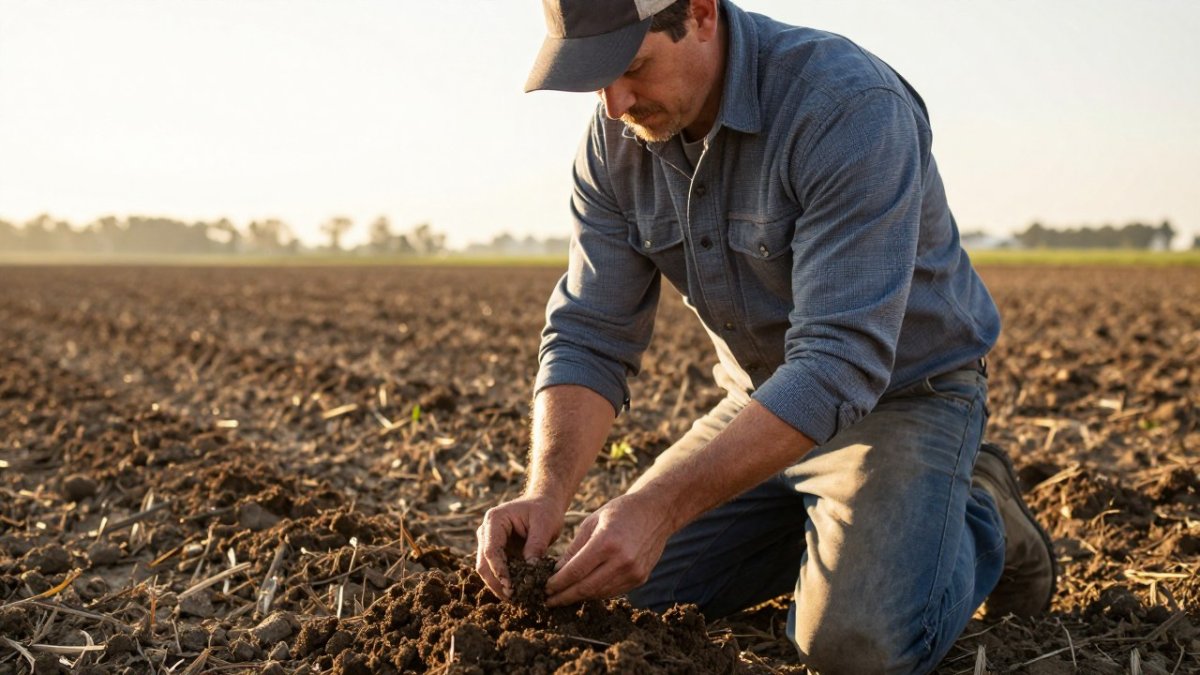
Structure the plan by season rather than calendar year alone. Each season has decisions that must be made before the window closes, and each has a fallback if the first attempt does not take.
Year One: Stabilize and Measure
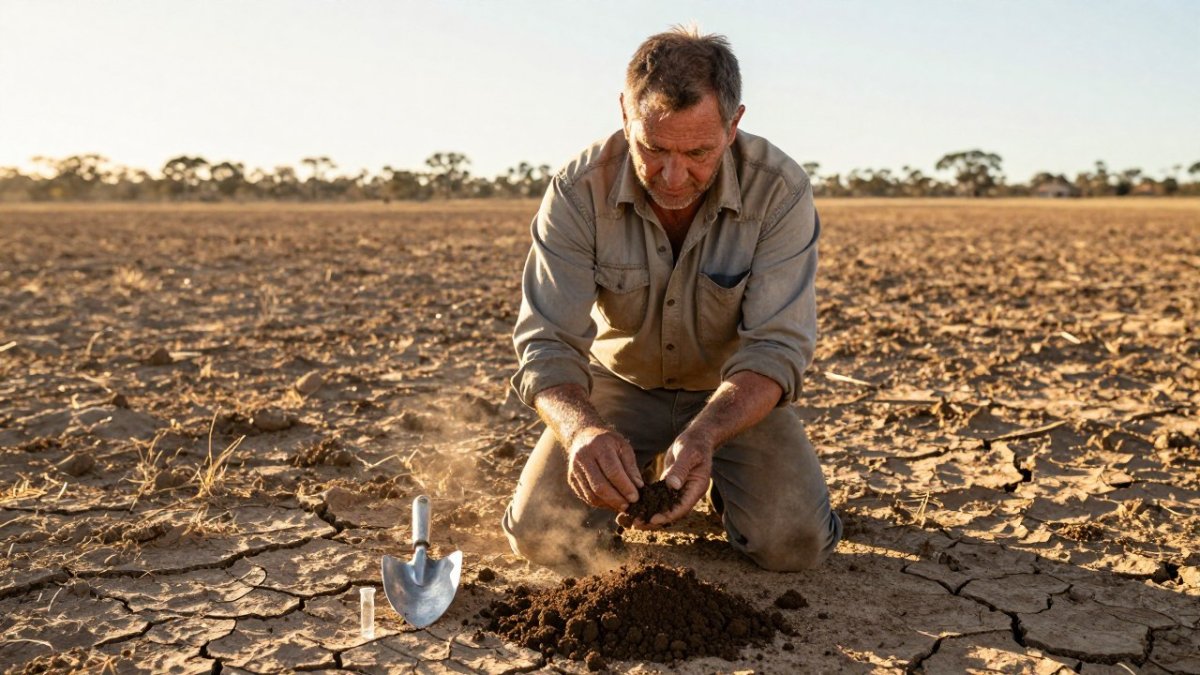
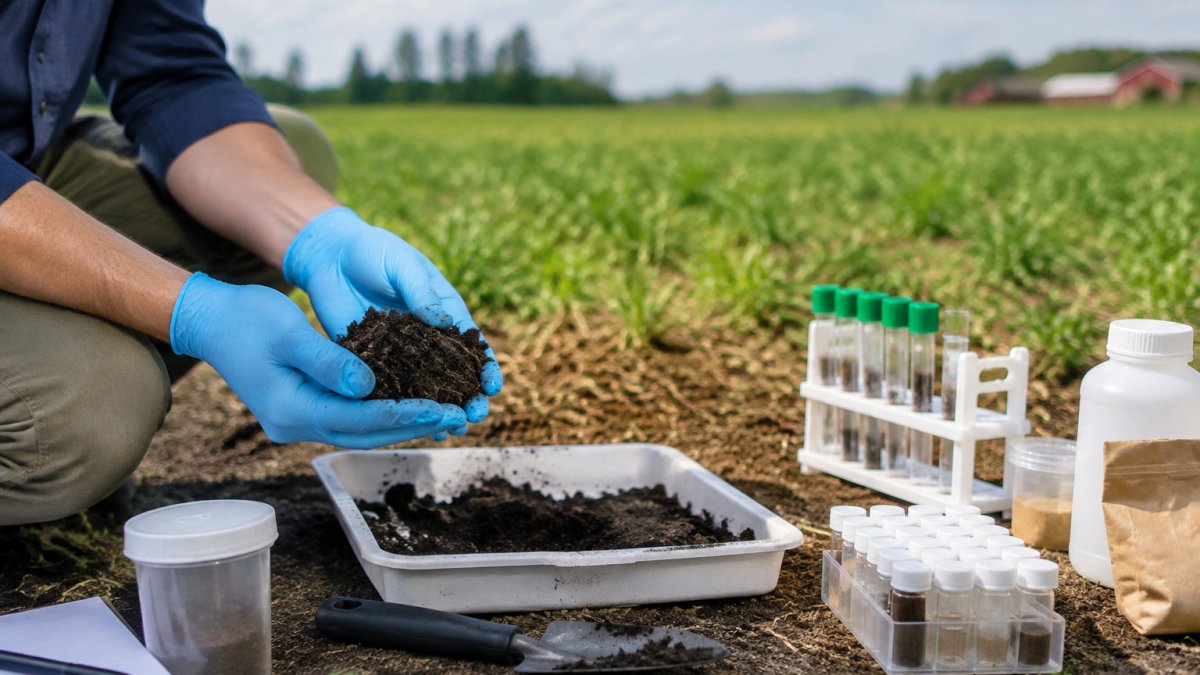
Fall before year one. Pull baseline soil samples by management zone, not field average.
Spring. Reduce tillage passes on the least productive fields first, usually the lowest organic matter or worst infiltration.
Summer. Scout for weed escapes in the reduced-till strips.
Fall. Terminate cover crops and record ground cover, residue mass, and any establishment failures.
Year Two: Add Rotation and Step Down Inputs
Winter. Use year-one data to choose which fields move to a more diverse rotation.
Spring. Introduce one additional crop on the trial acres.
Summer. Track pest and disease pressure in the diversified strips.
Fall. Re-test soil biology on the trial acres against the baseline. If organic matter or infiltration has not moved, adjust the practice mix before scaling.
Year Three: Scale What Worked
Winter. Decide which practices graduate from trial to full-field based on two seasons of data. Practices that did not perform get dropped or redesigned rather than forced.
Spring. Expand reduced tillage to roughly half the acres and widen the cover crop program.
Summer. Track input cost per acre by field to see whether the transition is actually reducing spend, not just changing it.
Fall. Review the financial baseline against current costs.
Years Four and Five: Integrate and Review
Year four. Integrate livestock grazing where the operation supports it. Fencing, water access, and grazing timing are the usual bottlenecks, and they are easier to solve on a small paddock than across the whole farm.
Year five. Run a full program review: compare KPIs against the year-one baseline, decide which practices are permanent, and set the next five-year targets. Revisit whether any certification or verification program fits the operation's markets.
Decision Points and Contingencies
The timeline only works with explicit decision points. Review at three moments each year: before spring planting, at mid-season, and after harvest. At each review, ask three questions, did the practice establish, did it cost what we expected, and did yield hold within an acceptable range? If any answer is no, hold that practice at the current acreage for another season rather than expand it.
Common contingencies worth writing into the plan:
- Cover crop fails to establish: replant a cheaper, faster-establishing species or leave the field fallow and document the cause.
- Weed pressure spikes after tillage reduction: add a targeted mechanical or chemical pass on the affected strips rather than abandoning reduced tillage farm-wide.
- Yield dips below the acceptable range: restore the previous input rate on that field for one season and re-evaluate.
Baseline Assessment and Measurable KPIs
Before changing anything, record where you stand. Pair it with simple farm records: yield per field, input spend per acre, and any pest or weed pressure.
Set three to five KPIs you can measure every season, organic matter percentage, water infiltration rate, input cost per acre, and yield stability across dry and wet years. To see what soil microbial testing measures and reveals, read our overview before you pick your indicators. Write down the target for each so you know when a practice is working. Keep the measurement protocol identical each season, same lab, same sampling depth, same time of year, or the comparison loses its value.
Choosing Practices for Your Region and Soil
No single practice works everywhere. A cover crop mix that thrives in a humid climate may fail in dry ground, and grazing timing depends on rainfall and forage growth.
A simple framework helps: start with soil drainage and texture, then layer in rainfall pattern, then the crop system, then local market access for any new crop.
Regenerative Farming Transition Plan Sample and Budget
A transition plan should include a budget that covers the years when yields may lag. Costs usually come from cover crop seed, equipment changes, soil testing, and lower yields during the first seasons. The worked structure below shows how to lay out the budget by year, think about cash flow, and estimate break-even and payback without pretending the numbers are the same on every farm.
Sample Plan Structure
Here is a simple sample structure you can adapt:
| Year | Main Practice Change | Main Cost Driver | Tracking Metric |
|---|---|---|---|
| 1 | Cover crops on 20% of acres | Cover crop seed | Ground cover, yield |
| 2 | Add rotation, cut one synthetic input | Seed and lower input use | Input cost per acre |
| 3 | Reduced tillage on half of acres | Equipment and labor | Water infiltration |
| 4 | Integrate grazing | Fencing, livestock management | Organic matter |
| 5 | Full program review | Monitoring | Yield stability |
Building the Enterprise Budget
Build the budget at the field level first, then roll it up. For each field entering the transition, list four lines: added costs, reduced costs, expected yield change, and one-time capital costs.
Added costs typically front-load in years one and two while reduced costs build slowly through years three to five. That mismatch is the cash-flow problem the budget exists to solve.
Cash Flow Through the Lean Years
Map the budget by quarter, not just by year, because cover crop seed and soil testing often fall in the same window as other pre-season expenses. The lean years are usually years one and two, when added costs are highest and savings have not yet materialized. Three practical ways to bridge that gap:
- Phase acres so only a portion of the farm is in transition at once, keeping the rest of the operation cash-positive.
- Use cost-share programs to offset a defined share of the added costs rather than the whole program.
- Time one-time capital purchases (a drill, a roller-crimper, fencing) to the year the practice actually scales, not year one.
Break-Even and Payback Logic
Break-even means the point at which cumulative savings and any program payments equal cumulative added costs and yield losses. Payback means the point at which one-time capital costs are recovered.
Build three scenarios, conservative, expected, and optimistic, and run each through the same five-year structure. The conservative scenario should assume yield losses in years one and two and no premium for any regeneratively grown crop. If the plan still breaks even under the conservative scenario, the transition is financially defensible. If it only works under the optimistic scenario, shrink the acreage or the pace.
Watch out: budgeting only the added costs and ignoring the yield-loss line is the most common way a transition budget looks fine on paper and fails in the field.
What the Budget Should Not Assume
Do not assume a premium price for regeneratively grown commodities unless a buyer has confirmed it in writing. Do not assume cost-share funding will be awarded, apply, but budget as if it will not be.
Pricing for soil testing and inputs depends on quantity, dates, and delivery, so request a current quote from BioSys before finalizing your numbers.
How to Reduce Fertilizer Costs Farming During the Shift
Fertilizer is often the largest single input cost, so it is usually the first place to look for savings. Review your last two seasons of fertilizer spending against soil test results, so you only apply what the soil actually needs.
- Test soil before every application season
- Reduce rates on fields with adequate nutrient levels
- Use cover crops to capture and recycle nutrients
Cutting rates too fast can hurt yield, so make changes in steps and compare each field against its previous season.
Using USDA Regenerative Agriculture Grants to Fund the Transition
Federal conservation programs may help cover some transition costs. Eligibility and funding change over time, so check current requirements with your local USDA Natural Resources Conservation Service (NRCS) office.
Plan for the paperwork early. Most applications require a conservation plan, and having your baseline data ready speeds up the process considerably.
Book Your Baseline Soil Biology Test to Start Your Plan
Every good transition plan starts with a clear baseline. BioSys offers soil biology testing for baseline readings. Contact our team to learn more about the testing and guidance available for your operation. Contact our team to request a quote for your operation.
Frequently Asked Questions
What should a regenerative farming transition plan include?
A useful plan starts with a baseline assessment of soil health, water infiltration, and current input costs, then sets measurable goals for each year. It should list the practices to adopt, such as cover crops, reduced tillage, and grazing management, with the sequence and timing for each. It also needs a cash flow budget that shows transition costs, expected yield changes, and when savings from reduced synthetic inputs are likely to offset them. Finally, it should name who will monitor results and how often the plan will be reviewed.
How long does it take to transition to regenerative farming?
Most operations take three to five years to see stable soil biology and yield patterns after changing their management. The first year often involves the most disruption, because input reductions and new practices take time to show results. Pricing for testing and services depends on quantity, dates, and delivery, so request a current quote from BioSys to plan the testing schedule for your farm.
What soil tests help guide a regenerative farming plan?
A standard chemical soil test shows nutrient levels and pH, but it does not show how active the soil biology is. Soil microbial analysis adds information on the living community that drives nutrient cycling. Testing a baseline before changes begin and repeating it at set intervals lets you track whether practices are building biological activity. BioSys offers soil testing for biological analysis, and its team can explain what the results mean for your next management decision.
How can farmers reduce fertilizer costs during a regenerative transition?
Reducing fertilizer costs usually happens in stages rather than all at once. Start by using soil test results to apply only the nutrients the crop actually needs, which avoids paying for excess product. Build soil organic matter and biological activity through cover crops and reduced tillage so the soil supplies more nutrients over time. Track input spending by field each season so you can see where reductions are holding yields steady and where you need to adjust.