 Comparison
Customized Compost vs Whole-Farm Soil Restoration for Biological Farming
Last Updated: November 10, 2026
Quick Summary
The compost vs soil restoration choice comes down to scope: customized compost is a tactical input blended for specific plant types, while whole-farm soil restoration is a strategic system that rebuilds soil biology, structure, and organic matter across the entire operation. Most growers need both, with restoration as the foundation and customized compost as the targeted layer on top.
- Customized compost targets single beds or crop groups within weeks to one season.
- Whole-farm restoration runs multiple seasons and requires microbial and biological analysis.
- Match compost to crop pH, rooting depth, nutrient demand, and salt tolerance before spreading.
- Immature compost ties up nitrogen, and manure-based compost can carry high soluble salts.
- Run restoration as the foundation and customized compost as the targeted layer on top.
Table of Contents
- Customized Compost vs Whole-Farm Soil Restoration: A Side-by-Side Comparison
- Why Is Compost Good for Soil? The Biology Behind the Benefits
- How to Improve Soil Quality for Farming with a Restoration Plan
- How to Improve Soil Quality Naturally for Vegetables with Customized Compost
- The Disadvantages of Composting and the Risks of a Compost-Only Strategy
- Where Each Approach Wins: Plant-Specific Compost vs Whole-Farm Restoration
- Building Your Integrated Soil Plan with BioSys
- Frequently Asked Questions
Customized Compost vs Whole-Farm Soil Restoration: A Side-by-Side Comparison
The compost vs soil restoration choice, customized compost for specific plant types versus a whole-farm soil restoration plan, is not a coin flip. One fixes a bed; the other rebuilds the engine that feeds every bed on the property. This guide from BioSys breaks down where each approach delivers, where it falls short, and how to decide which one your operation actually needs.
Here is the short answer before the details: plant-specific compost is a tactical tool, and whole-farm restoration is a strategic system. Most growers need both, but they need them in a specific order.
What Each Approach Actually Delivers
Customized compost is a finished, biologically complete amendment blended for a particular crop, bed, or planting group. It targets pH, texture, and nutrient release to match what that plant wants.
Whole-farm soil restoration is a management plan that rebuilds soil biology, structure, and organic matter across the entire operation. It changes how you feed the soil, not just what you spread on it.
Quick Comparison Table
| Factor | Customized Compost | Whole-Farm Restoration |
|---|---|---|
| Scope | Single beds or crop groups | Entire operation |
| Timeline | Weeks to one season | Multiple seasons |
| Primary goal | Match plant needs | Rebuild soil function |
| Testing required | Basic soil test | Microbial and biological analysis |
| Labor profile | Periodic applications | Ongoing management shifts |
| Best for | Gardens, nurseries, high-value beds | Row crops, pasture, large acreage |
Why Is Compost Good for Soil? The Biology Behind the Benefits
Compost is good for soil because it feeds the organisms that build structure and cycle nutrients. The U.S. EPA's composting guidance notes that compost use supports healthier soil, helps prevent erosion, conserves water, and improves plant growth.
That is the mechanism in plain terms. Compost adds organic matter, and soil organisms convert that matter into the aggregates and nutrients plants can actually use. Skip the biology and compost becomes just another input.
Soil Structure, Aggregation, and Water Infiltration
Organic matter binds soil particles into aggregates. Aggregated soil holds shape when wet, resists crusting, and lets water move down instead of running off. Better aggregation means better water infiltration and moisture retention, which matters most in dry spells and heavy rain alike.
Nutrient Availability and Microbial Activity
Compost feeds microbial activity, and active microbes release nutrients in plant-available forms over time.
How to Improve Soil Quality for Farming with a Restoration Plan
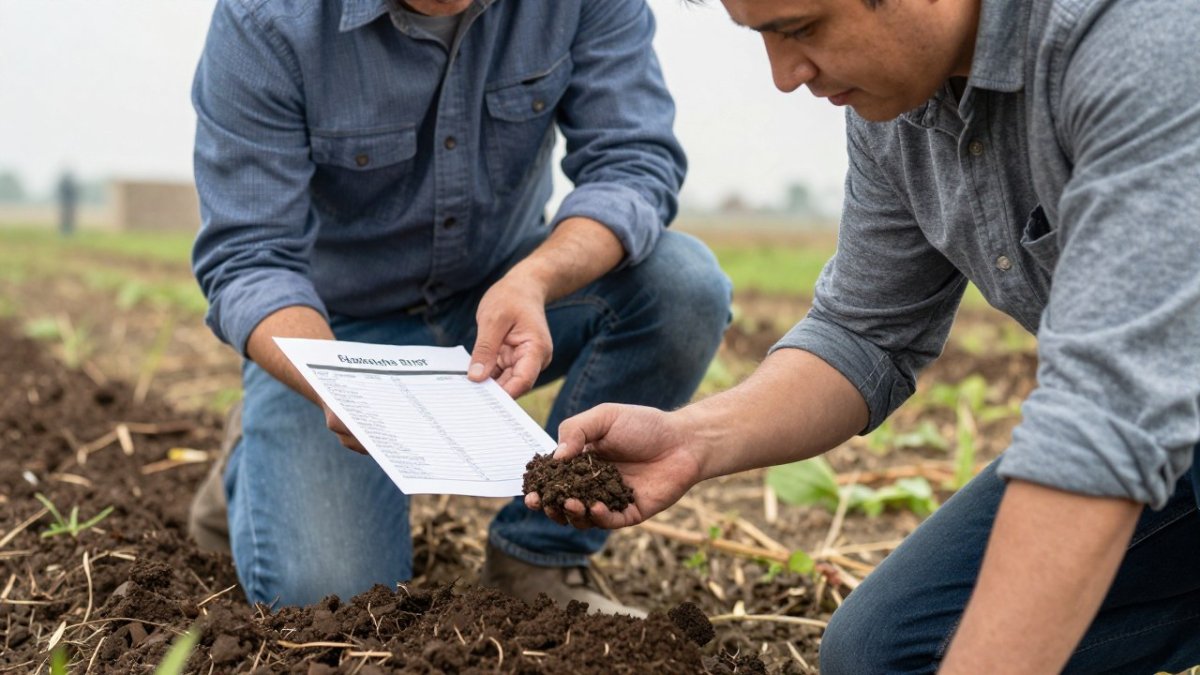
To improve soil quality for farming, start with testing, set measurable targets, and monitor on a fixed schedule. Restoration is a management plan, not a product purchase.
Soil Testing and Decision Criteria
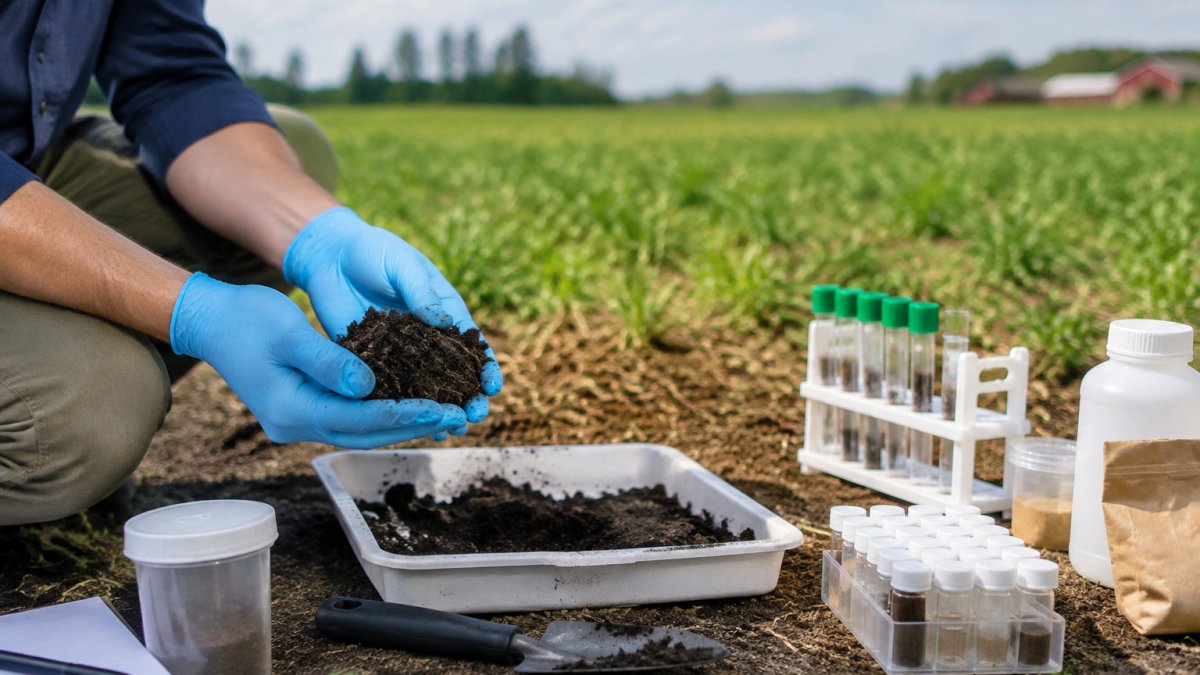
Baseline testing tells you what you are working with before you spend on amendments. A biological workup goes further than standard chemistry. If you want to understand what a microbial panel actually shows, read what soil microbial testing reveals about your soil before you commit to a plan.
Use these criteria to decide:
- Organic matter level and trend
- Aggregate stability and infiltration rate
- Microbial activity and diversity
- Nutrient balance, not just totals
- pH and soil texture
Measurable Outcomes and Monitoring Timelines
Set a baseline, then retest on a fixed cadence. Most restoration plans run seasonal or annual checkpoints. Track infiltration, aggregation, and organic matter together, because one number alone hides progress. For a practical walkthrough on reading results, see how to act on soil biology test results.
How to Improve Soil Quality Naturally for Vegetables with Customized Compost
To improve soil quality naturally for vegetables, match the compost blend to the crop's pH preference, rooting depth, nutrient demand, and salt tolerance, then set a rate and maturity standard before you spread. A tomato bed and a carrot bed do not want the same material, and a bag labeled "compost" tells you nothing about maturity, salinity, or feedstock.
Compost Recommendations by Plant Type
Use the following general guidance as a starting point, then adjust with a soil test.
- Leafy greens (lettuce, spinach, kale): nitrogen-forward, fine-textured compost worked into the top 2 to 3 inches at roughly 1 to 2 inches broadcast. Target pH 6.0 to 7.0. Avoid immature, high-ammonia compost that can burn tender seedlings.
- Root vegetables (carrots, beets, radishes): loose, low-clod, well-screened compost at 1 inch or less, incorporated shallowly. Excess nitrogen and fresh manure push forked roots and top growth at the expense of the root. Target pH 6.0 to 6.8.
- Fruiting crops (tomatoes, peppers, eggplant): calcium-rich, fully mature compost at 1 to 2 inches at planting, plus a 1-inch side-dress at fruit set. Target pH 6.2 to 6.8. Blossom-end rot is a calcium-uptake problem often driven by uneven moisture, not just low soil calcium.
- Brassicas (cabbage, broccoli, kale): compost at 1 to 2 inches with a pH near 6.5 to 7.0; brassicas tolerate higher pH than many vegetables and benefit from boron and sulfur availability in mature compost.
- Perennials and shrubs: coarser, less screened compost used as a 2- to 3-inch mulch layer, kept a few inches off the crown. Do not incorporate deeply around established woody roots.
- Lawns: a thin 1/4- to 1/2-inch topdressing of fine, mature compost once or twice per season; heavier layers smother turf.
Application depth and rate matter as much as the blend. Overapplying mature compost is one of the most common vegetable-garden mistakes, it raises soluble salts and phosphorus without adding proportional biological benefit. If you are choosing material for a vegetable plot, this step-by-step guide to choosing compost for your vegetable garden walks through the decision.
Maturity, Feedstock, and pH Checks Before You Spread
Maturity is an important quality consideration when choosing compost.
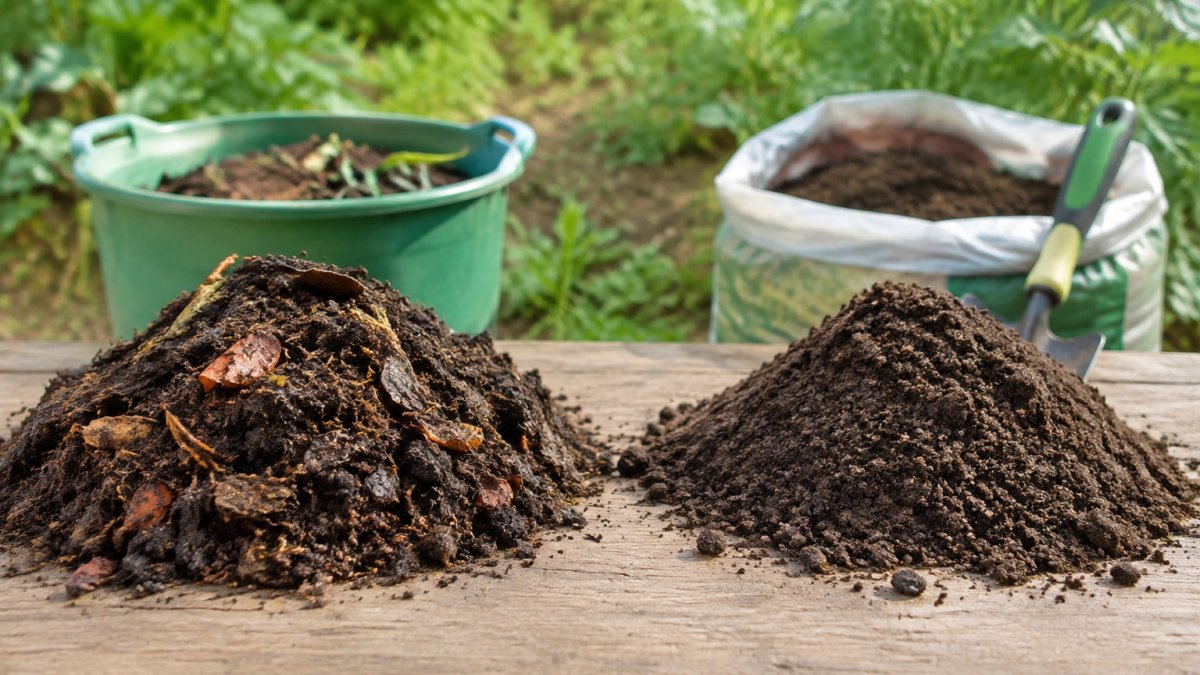
Feedstock affects compost composition. Manure-based compost carries higher salt and phosphorus loads, and yard-trimming compost is typically lower in nutrients but useful for structure.
Matching Compost to Soil Test Results
A basic soil test, pH, organic matter, phosphorus, potassium, calcium, and soluble salts, tells you whether the bed needs structure, nitrogen, or pH correction. Pair the compost choice with the restoration criteria in the section above so targeted applications reinforce the whole-farm plan.
The Disadvantages of Composting and the Risks of a Compost-Only Strategy
The disadvantages of composting include that immature compost can tie up nitrogen, uneven feedstock can create inconsistent batches, and compost is bulky to move. A compost-only strategy also leaves soil structure and biology unaddressed between applications.
Contaminants, Salinity, and Overapplication
- Herbicide residue: manure and yard-waste feedstocks can carry persistent herbicides (aminopyralid and clopyralid are the common culprits) that survive composting and injure broadleaf crops. Ask suppliers for feedstock history and run a bioassay on any new source.
- Salinity: manure-based and food-waste composts can carry high soluble salts. Repeated heavy applications raise electrical conductivity and stress germination; check salt levels before using compost in seed-starting mixes.
- Nutrient imbalance: compost is not a balanced fertilizer. Repeated applications at high rates build phosphorus and potassium far faster than nitrogen, which can lock up micronutrients and create runoff risk.
- Immature compost: unstable material continues to heat and consume oxygen and nitrogen in the soil, causing nitrogen tie-up and root damage. Maturity, not age on the bag, is the test.
- Weed seeds and pathogens: properly managed thermophilic compost reduces both, but poorly turned windrows and cold piles do not. Biosolid-based compost carries additional regulatory requirements.
- Overapplication: too much of a good material compacts soil, smothers biology, and wastes money. More compost is not a substitute for a plan.
Economics, Labor, and Scalability
Compost-only programs can be harder to scale on large acreage, since hauling material and turning windrows require labor and fuel. Costs depend on transport distance, application labor, and testing.
A common pattern is that targeted compost pays back fastest on high-value beds, nursery stock, and problem soils, while whole-farm restoration carries the bulk of the acreage through cover crops, reduced tillage, and managed grazing. If cost is the worry, this guide on how to reduce fertilizer costs without cutting yield covers the economics honestly.
When Compost Alone Is the Wrong Tool
Compost alone may not address the underlying cause when the limiting factor is drainage, compaction, pH, or biology rather than organic matter.
Where Each Approach Wins: Plant-Specific Compost vs Whole-Farm Restoration
The comparison of compost vs soil restoration comes down to this: compost is an input, restoration is a system. Applying compost without a restoration plan is like fertilizing a field with broken drainage.
Building Your Integrated Soil Plan with BioSys
The strongest programs run both tracks together: restoration as the foundation, customized compost as the targeted layer on top. That is the model BioSys builds for growers, combining soil microbial analysis with biologically complete, custom-fit compost production.
We start with testing, translate results into a plan, and match compost blends to specific plant types. No chemical fertilizers, pesticides, or herbicides required. If you are planning a transition, our guide on planning a regenerative farming transition is the natural next step.
The gap between a compost purchase and a soil plan is where most operations stall. BioSys closes it with soil microbial analysis, custom-fit compost production, and regenerative planning that removes reliance on chemical inputs. Get started with BioSys and build a soil plan that holds up season after season.
Frequently Asked Questions
What are two methods farmers use to restore or maintain soil health?
Two common methods are applying customized compost tailored to specific plant types and following a whole-farm soil restoration plan that combines cover crops, crop residues, reduced tillage, and compost. Customized compost delivers targeted biology and nutrients to a particular crop or bed, while a restoration plan addresses soil organic matter, aggregation, water infiltration, and microbial activity across the entire operation. Many growers use both: compost for immediate plant needs and a restoration plan for long-term soil function.
How can compost be customized for different plant types?
Compost can be customized by adjusting feedstocks, maturity, particle size, and biological composition. Compost can be matched to specific plant types, and a soil microbial analysis can help determine which biology is missing so the compost you apply suits the plant and the soil rather than a generic bag off the shelf.
Is compost enough to restore soil health on a farm?
Compost alone is generally not a complete soil health system on a whole-farm scale. It is one component of a broader approach, and testing before and after application can show whether soil conditions are changing. For many operations, compost works best as one component of a biological farming plan rather than the only input.
What are the disadvantages of composting that growers should plan for?
Composting has real drawbacks: it requires space, labor, and time. Odor, leachate, and weed seeds are possible if piles are poorly managed, and nutrients can be lost through runoff. Planning for application depth and rate can help reduce these risks.